
Bedliner on a Jeep: Full-Body, Tub and Rocker Coatings Explained
What a sprayed liner does on a Jeep, from rockers and flares to the tub and full body, what the prep involves, what it costs, and why it should be treated as permanent.
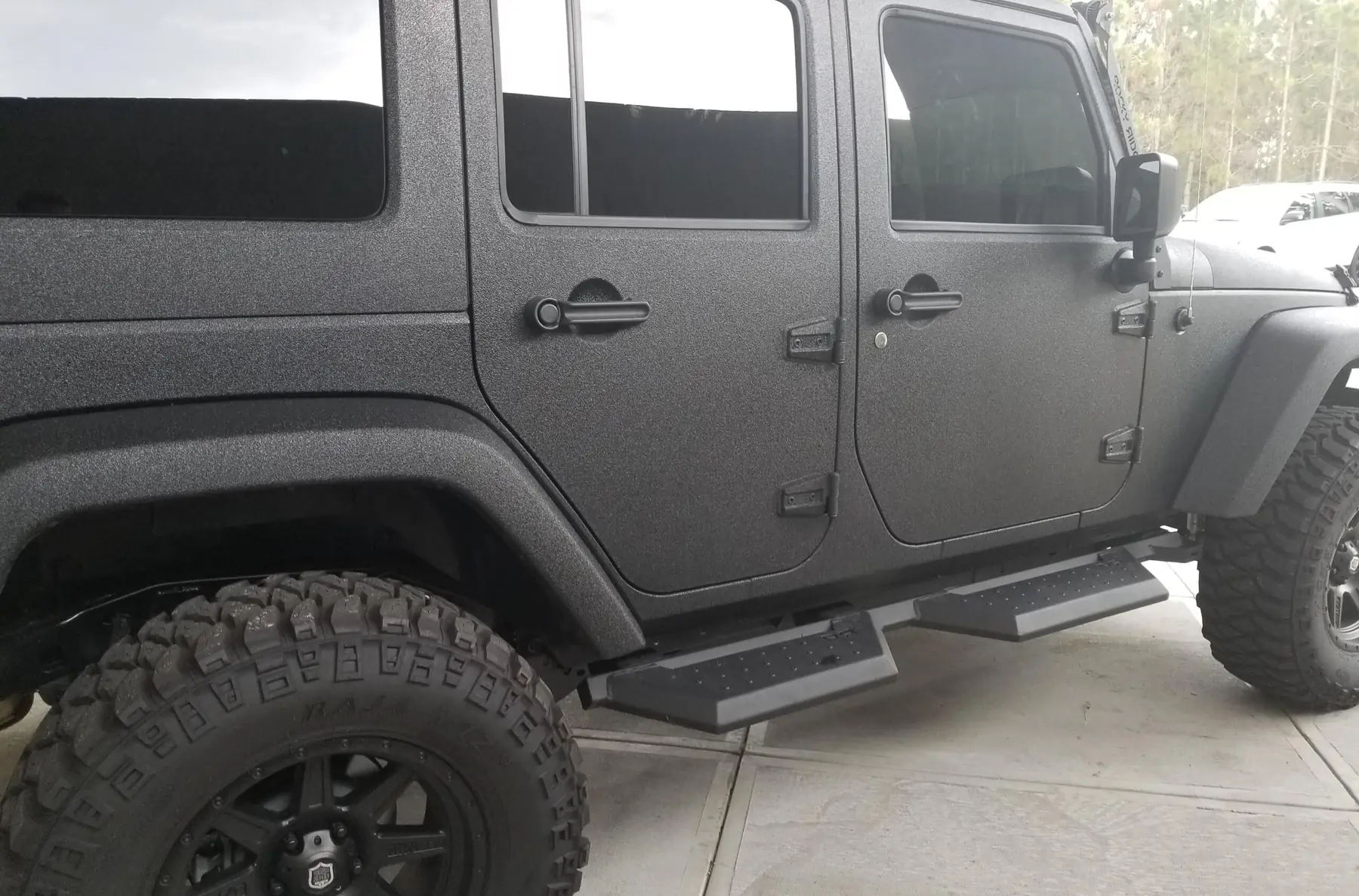
A spray-on liner can cover just the rockers and bumpers, the inside of the tub, or the whole Jeep. The coating goes on fast. Most of what you pay for is disassembly, masking and prep.
Ask for an aliphatic UV topcoat if you want the color to hold, fix any rust first, and treat the job as permanent. Getting a liner off a Jeep is far harder than putting it on.
Key takeaways
- Rockers, flares and bumpers are the cheapest place to start, and they take most of the trail damage anyway.
- A tub liner lets you rinse out the floor, but check where wiring and modules sit before you plan on hosing it.
- Full-body jobs are mostly labor, because doors, hood, lights and trim have to come off or be masked.
- Without an aliphatic UV topcoat, a standard aromatic liner will chalk and fade on a Jeep that lives outside.
- A liner is permanent and will not fix rust, so have rot cut out and repaired before anything is sprayed.
A Jeep takes abuse in places a pickup never sees. Rocks hit the rockers, branches drag down the sides, mud and sand get packed into the tub, and the floor gets wet every time the top comes off. A sprayed polyurea liner handles all of that, which is why you see it on everything from rocker panels to entire bodies.
The coating is the easy part. Polyurea gels within seconds of leaving the gun, so a skilled applicator can cover a Jeep quickly. The real work, and most of the price, is in what gets taken apart, masked and prepped before anyone pulls the trigger.
Three ways to coat a Jeep
Rockers, fenders and bumpers
This is where most owners start. The rocker panels and lower doors take the hits on the trail, and steel bumpers and sliders get scraped constantly. A textured liner on these areas soaks up rock chips and is easy to touch up. Plastic fender flares can be coated too, but plastic needs its own prep and an adhesion promoter, so ask the shop how they handle it.
Tub and interior
Coating the inside of the tub means pulling the seats, carpet, console and trim, then spraying the floor, wheel tubs and cargo area. You end up with a floor you can sweep or rinse, and a bit less road noise. If you plan to hose it out, first look at where wiring, connectors and any modules sit near the floor, and make sure the drain plugs stay usable.
Full body
A full-body job covers every exterior panel, sometimes along with the tub and the underside of the hood. It gives you the toughest finish you can put on a Jeep, and it takes the most labor. Many shops build the rockers and lower panels heavier and keep the upper panels lighter so the texture looks even and the weight stays down.
Disassembly and masking: where the hours go
A clean full-body job starts with taking things off. Doors usually come off their hinges so the jambs and edges can be sprayed or masked cleanly. Lights, mirrors, the grille, badges, fender flares, door handles and often the hood come off as well.
Whatever stays on gets masked. That includes the glass, the windshield frame and its seal, door seals, hinge pins, latches and strikers, the fuel door, wiring harnesses and any sensors or cameras. Edges are where a liner job looks professional or looks amateur, so ask how the shop finishes tape lines at seams and openings.
Then comes prep. Paint gets scuffed or abraded so the liner has something to grip, and every surface is degreased. Bare metal gets primed where needed. Any rust has to be dealt with at this stage. Polyurea is not a structural repair, so rot and rust-through must be cut out and patched before anything is sprayed, or the rust keeps spreading underneath.
A liner sprayed over active rust only hides it. Ask the shop to show you any rust they find during prep and agree on the repair before they coat.
Texture, color and the UV topcoat
Texture is adjustable. A heavier texture gives more grip on rocker steps and the tub floor, and it hides small dents and waves in the body. A finer texture looks cleaner on upper panels and is easier to wash. Ask to see sample panels sprayed at the texture you are getting.
Color is where many Jeep owners get surprised. Most standard liners are aromatic, which means they chalk and fade with sun exposure, and black slowly turns grayish. An aliphatic topcoat over the liner holds color and sheen far better. On a vehicle that lives outside with the top off, that topcoat matters more than it does inside a truck bed. Tinted and color-matched liners are available, and they cost more.
What a Jeep liner job costs
Every shop prices this differently, and region, prep and how much comes apart change the number a lot. The ranges below are rough starting points for a Wrangler-sized vehicle, not quotes.
| Job | What is usually involved | Rough price range |
|---|---|---|
| Rockers and lower panels | Masking, scuffing and spraying the lower body below a set line | About $300–$900 |
| Bumpers, sliders or flares | Parts removed or masked, prepped to suit steel or plastic | About $150–$600 per set |
| Tub interior | Seats, carpet and trim out; floor, wheel tubs and cargo area sprayed | About $600–$1,800 |
| Full body exterior | Doors, hood, lights and trim off or masked; full prep of every panel | About $2,500–$6,000 and up |
| UV topcoat or color | Added over the liner on exposed areas | A few hundred to over $1,000 extra |
Things that push a quote up include full door and hood removal, rust repair, color or color matching, a UV topcoat, extra thickness on the lower panels, and coating the underside of the hood or the door interiors. Bolt-on parts you remove and drop off yourself can bring it down at some shops.
Trail rash and repairs
This is where a liner earns its keep. A scrape that would go through paint usually just scuffs the textured surface. Deeper gouges can be cleaned, scuffed and re-sprayed, and the patch blends in well because of the texture. A faded area can be topcoated again.
A dent is another story. The liner moves with the panel, so a hard hit often leaves the coating intact over bent metal. To fix the panel properly, a body shop has to cut back the liner, repair and refinish the metal, then have the liner patched. Keep that in mind when you pick your lines on the trail.
For upkeep, wash it like any other finish and avoid harsh solvents. Our bedliner maintenance guide covers cleaning and touch-ups in more detail.
Resale: plan on it being permanent
A bonded liner does not come off easily. Removal means grinding, chemical stripping or blasting, and the panels usually need bodywork and paint afterward. If the Jeep is leased, or you may want the factory paint back someday, coat only the removable parts.
Resale cuts both ways. Off-road buyers often see a liner as a plus, while others wonder what is under it. Take dated photos of the bare body during prep and keep the shop invoice. That record answers the obvious question when you sell.
How to vet a shop
Ask to see a Jeep or another full vehicle they have coated, in person if possible. Look closely at the edges around the door openings and lights. Then ask direct questions:
- What comes off the vehicle, and what gets masked?
- How do you prep painted panels, bare metal and plastic?
- What thickness are you building on the floor and the rockers?
- Is the liner aromatic, and is an aliphatic UV topcoat included?
- What happens if you find rust during prep?
- What does your written warranty cover?
If you are weighing different chemistries, our explainer on polyurea vs polyurethane lays out the differences. A good shop will answer every one of these questions plainly and put the scope in writing before you drop the Jeep off. Own a side-by-side too? The same prep rules apply, and our UTV bedliner guide covers what changes.
Frequently asked questions
How much does it cost to bedliner a whole Jeep?
Full-body quotes commonly land in the low-to-mid thousands of dollars and climb with disassembly, color and a UV topcoat. Prices vary a lot by shop, region and how much prep your Jeep needs, so get a written quote that lists what comes off.
Can you remove bedliner from a Jeep later?
Not easily. Sprayed polyurea bonds to the prepped surface, so removal means grinding, stripping or blasting, and most panels need bodywork and paint afterward.
Will bedliner on a Jeep fade in the sun?
Standard aromatic liners chalk and fade with UV exposure. An aliphatic topcoat over the liner holds color and sheen much better, and it is the main thing to ask for on an exterior job.
Does bedliner stop rust on a Jeep?
A well-bonded liner seals the metal it covers and keeps water off it. It does not stop rust that is already there, so rusted areas must be cleaned to sound metal or cut out and repaired first.
Is a bedlined Jeep harder to sell?
It depends on the buyer. Off-road buyers often like it while others worry about what is underneath, so keep dated photos of the bare body from before it was sprayed.
Was this article helpful?
Thanks for telling us. Spot something wrong?
Keep reading
More from the blog.
Trailer Bedliners: Decks, Ramps, Enclosed and Horse Trailer Floors
Where a sprayed liner works on utility, flatbed, enclosed and horse trailers, how wood, steel and aluminum get prepped, and what drives…
UTV and Side-by-Side Bedliner: Beds, Floors, Fenders and Roofs
Which parts of a UTV are worth coating, why plastic needs different prep than steel, what to keep the liner away from,…
Spray-On Liners for Cargo Vans: Sprinter, Transit and ProMaster Floors
What a sprayed liner does on a cargo van floor, wheel wells and walls, what the shop removes first, how long the…